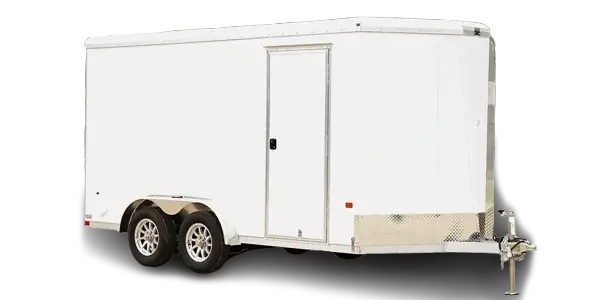
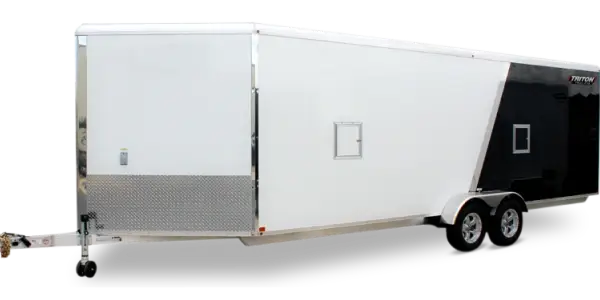
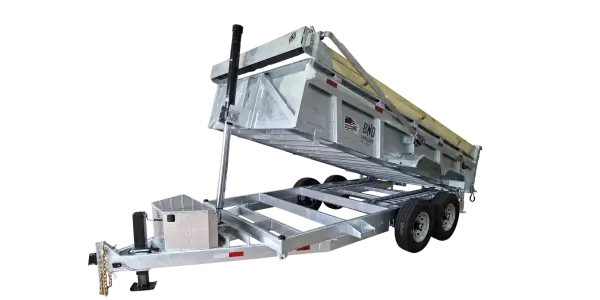
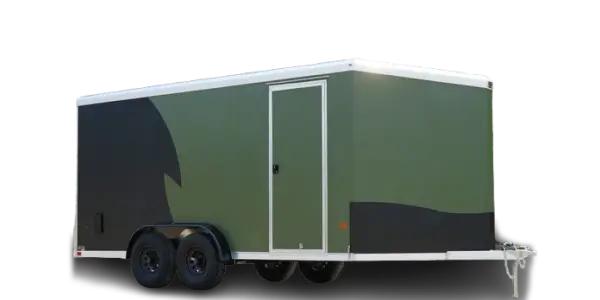
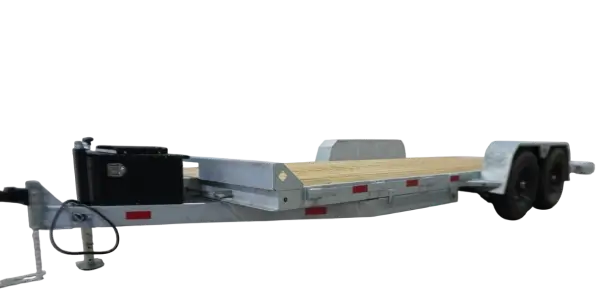
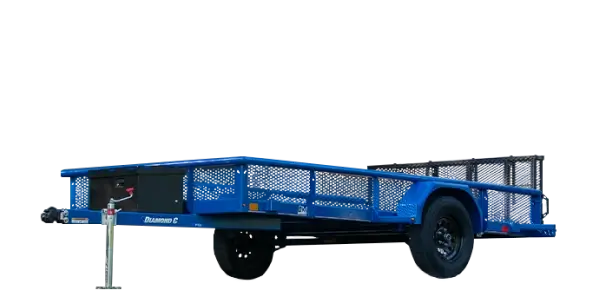
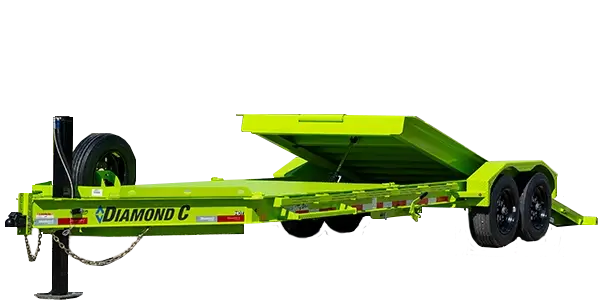
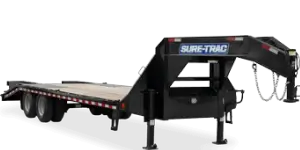










Coupling in the bed instead of on the bumper
A gooseneck is not a type of trailer so much as a different place to attach one. The coupler sits over the rear axle of the truck rather than behind the bumper, and that single change is what lets a deck get longer, heavier and considerably calmer at highway speed. Whatever is on the lot in Holland appears below. If it is not there, tell us the load and we can specify and order a build.


Deciding whether you actually need one
Plenty of people who ask about goosenecks are better served by a heavy bumper pull, and plenty who never considered one should be. The question is answered by the truck in your driveway and the weight you keep running out of.
Start with the truck, not the trailer
A gooseneck needs a hitch mounted through the bed floor into the frame, which in practice means a three quarter ton or one ton pickup. Look up your truck gooseneck or fifth wheel rating specifically, because it is a separate and usually much higher figure than the conventional tow rating on the same page. Also look at payload, since the pin weight of a loaded gooseneck sits entirely on the rear axle and counts against what the truck can carry, not just what it can pull.
Turning radius in a yard, not on the highway
The advantage people talk about is stability at speed. The advantage they notice is maneuvering. Because the pivot is ahead of the rear axle, the trailer follows the truck through a tight turn instead of cutting the corner, which makes a long deck genuinely usable on a job site or a farm lane. The flip side is that a hard jackknife puts the trailer nose into the side of your bed, so the first few reversals deserve an empty parking lot.
Where the ratings go once you pass 14,000 pounds
Bumper pull equipment trailers top out in a fairly predictable band. Gooseneck decks keep going well past it, which is the reason they exist. If you are repeatedly loading to the limit of a bumper pull and then leaving the attachments behind, that is the signal. Buying a gooseneck to carry what a bumper pull already handles is money spent on a hitch install you did not need.
Deck height, dovetails and hydraulics
The neck has to clear the bed rail, so gooseneck decks sit higher than bumper pulls and loading angles get steeper. That is why this category is full of dovetails, flip-over ramps and hydraulic tails. Hydraulics cost money and add weight, and they are the right answer if you load a low-clearance machine by yourself every day. If you load a skid steer twice a month, a well-designed mechanical tail will do the job.
Getting the hitch and the trailer sorted together
Hitch options vary a lot between makes, model years and bed configurations, and the install is not a five minute job. Talk to our service department about your truck before you commit to a trailer, so the two decisions are made together rather than one of them surprising the other. Financing and trade-ins apply on the trailer the same as anything else we sell.
Gooseneck trailer questions
Almost never. A gooseneck hitch mounts through the bed into the frame and the pin weight lands on the rear axle, which is more than most half ton trucks are rated to carry. Three quarter ton and one ton pickups are the normal starting point.
Higher weight ratings, longer usable decks, tighter turning in a yard and much steadier tracking at highway speed. If a bumper pull already carries your load comfortably, a gooseneck is extra cost you do not need.
They do the same job with different hardware. Gooseneck uses a ball in the bed with a coupler on the trailer neck, fifth wheel uses a plate and kingpin. Gooseneck hardware takes up less bed space and is the standard on work trailers.
Usually, because the neck has to clear the bed rail. That steepens loading angles, which is why dovetails, flip-over ramps and hydraulic tails are so common in this category.
Talk to our service department about your specific truck. Hitch options differ by make, model year and bed configuration, so it is worth sorting out before you order a trailer.