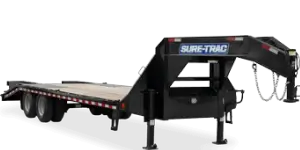











Twelve foot decks one person can push around
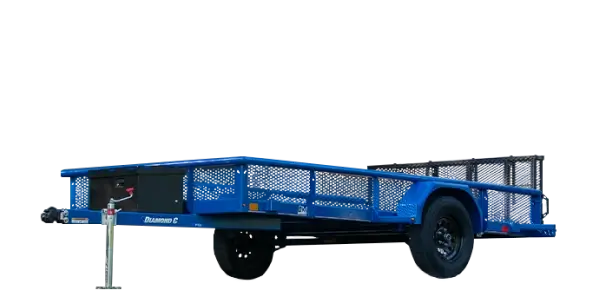
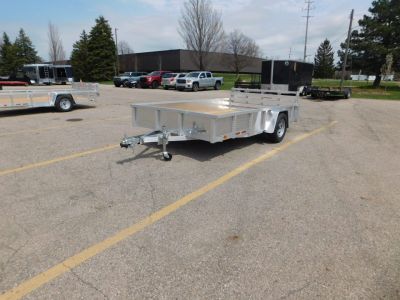
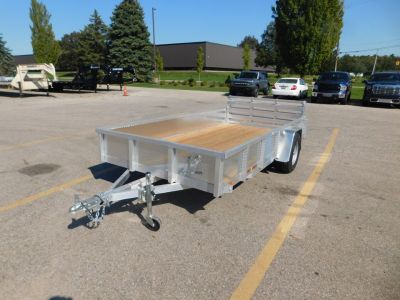
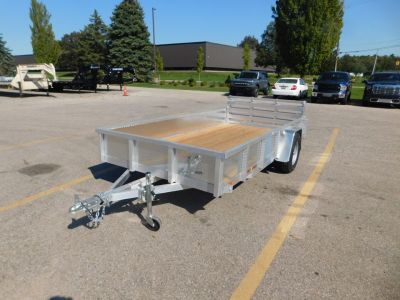
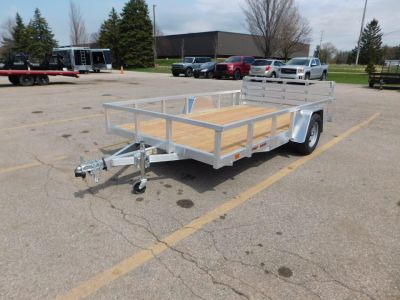
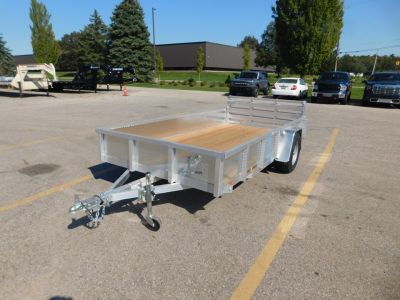
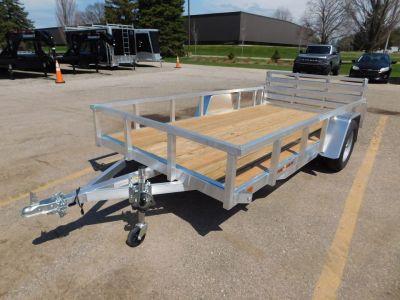
The Sport Haven trailers we keep in Holland sit almost entirely in the twelve foot open utility class, with aluminum frames and a 2,990 pound gross rating. That combination is the sweet spot for a homeowner or a small landscaping outfit: enough deck for a mower, a load of brush or a quad, light enough to tow behind an SUV, and light enough to move by hand when it is empty. Current stock is below.


Making sense of the AUT lineup
These models look nearly identical in a listing and differ in ways that matter once the trailer is in your driveway. The numbers in the model name carry most of the information.
Six wide or seven wide, on the same twelve foot deck
The first pair of digits is the deck width, so the difference between the two families we stock most of is a foot across the bed on the same length. That foot decides whether a zero turn mower fits between the rails, whether two quads sit side by side, and whether a sheet of plywood lies flat. It also decides how the trailer stores and how much of the road it takes up behind you. If you are unsure, take the widest thing you plan to carry and measure it before you come in.
The suffixes are worth asking about, not guessing at
The letters after the numbers describe the deck arrangement, the sides and the gate. Two trailers with the same width and length and different suffixes are genuinely different trailers to use, and the listing will not always make that obvious. Point at a model on this page and ask us what the letters mean on that specific unit. It takes thirty seconds and stops you buying a solid side trailer when you wanted open rail.
Why 2,990 pounds is a deliberate number
Single axle utility trailers cluster just under three thousand pounds gross because that keeps them inside what most passenger vehicles and light SUVs can tow, and out of several regulatory thresholds. Subtract the empty trailer, which on an aluminum build is genuinely light, and you are left with most of a ton of payload. If you regularly carry more than that, you want a tandem axle rather than a bigger single.
Aluminum on a lakeshore winter
Holland sits close enough to the lake that trailers here live in damp, salty air for half the year, often parked outside. A painted steel utility frame fights that its whole life. An aluminum frame does not, which is the main argument for paying more up front. It is not a maintenance-free trailer though: the axle, hubs, bearings, brakes if fitted, lights and wiring are all conventional parts and want a look each spring.
Tongue weight on a light trailer still matters
Because these are easy to pull, people load them carelessly. Keep roughly ten to fifteen percent of the load over the tongue, put the heavy item ahead of the axle rather than at the tail, and check the trailer sits level behind the vehicle. A light trailer loaded rear-heavy will sway at fifty five miles an hour, and no tow vehicle fixes that.
Common Sport Haven questions
A foot of deck width on the same length. That foot decides whether a zero turn mower fits between the rails, whether two quads sit side by side, and whether plywood lies flat. Measure your widest load before choosing.
They describe the deck arrangement, the sides and the gate. Two trailers with the same dimensions and different suffixes are different to use, so ask us to decode a specific unit rather than guessing from the listing.
Subtract the trailer weight from the gross rating to get the payload, which on a light aluminum build usually leaves close to a ton. Always work from the sticker on the actual trailer rather than a general figure.
Usually yes. Single axle aluminum utility trailers in this class sit inside the rating of most mid-size SUVs and crossovers with a factory hitch. Confirm your vehicle tow rating and that the wiring connector matches.
The frame does not rust, but the axle, hubs, bearings, lights and wiring are ordinary components. Give them a check each spring and rinse the underside after a salty winter.